

There's no Gen Z.
Embracing the Paradox Paradigm.

Everybody’s locked in, but what really feels fixed these days?
Take “Gen Z”, for example.
If there is one term people fixate on more than “cultural relevance,” it is this one.
No surprise, really: according to Bain, Gen Z is expected to account for 25–30% of global luxury purchases by 2030.
So everybody’s targeting “Gen Z” but the target was never one thing to begin with.
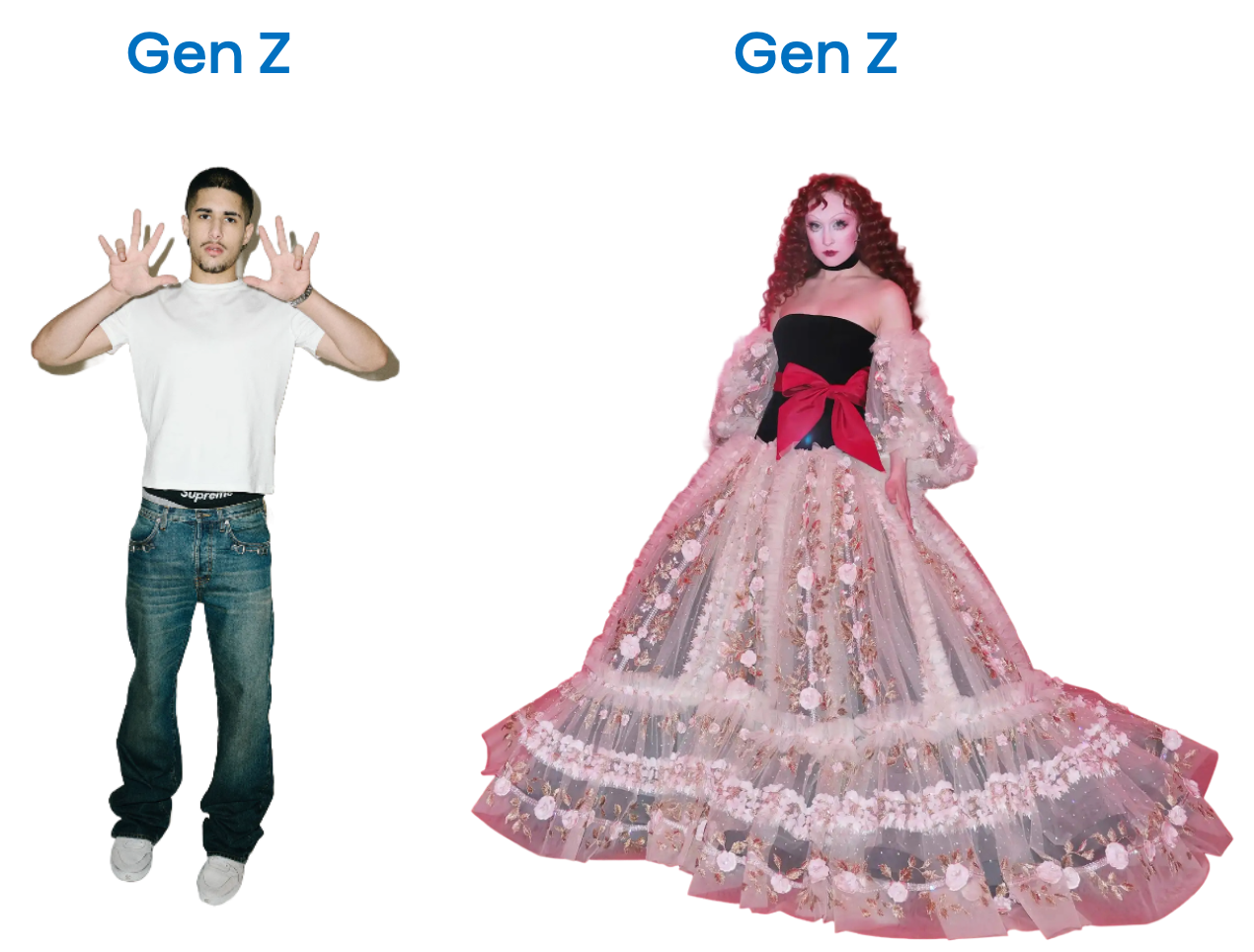
If we admit it, “Gen Z” is less a useful category than a corporate crutch: a convenient catch-all that promises the alluring illusion of certainty while flattening complexity in a hypercomplex world, until it means almost everything and explains almost nothing.
The limits of demographics have been exposed.
Trend-forecasting group K-HOLE’s 2013 (!) Youth Mode report already pointed to the dissolving connection between age and social expectation, and challenged the idea of generational linearity altogether – arguing instead for a shift from appearances to attitudes.
Real connection begins beneath the surface.
The brands that resonate understand this.
Crocs gets it. Rather than reducing Gen Z to a single type, it built collaborations across wildly different niches – from country star Luke Combs to performance-outdoor brands like ROA, streetwear names like Palace Skateboards, and fried-chicken-scented clogs with KFC.
Heaven by Marc Jacobs kept resurfacing as a benchmark for winning over young people precisely because it understood how to work with the right people from within the culture, rather than forcing its way in based on assumptions. As art director Ava Nirui recalls in a Vogue feature: “Everything is so unpredictable. We’re not purposefully trying to get into the Gen Z mindset, we’re just working with people and creating things that we think are cool.”
Yet brands keep reaching for shallow solutions.
Everything ‘taps into culture’. Nobody connects.
Everybody’s engaging. Few are exciting.
Gen Z is just the symptom.
We can see the same reflex everywhere: the urge to turn messy culture into buzzy shortcuts – not to structure complexity, but to flatten it into easy answers. Trendy terms package messy realities as neat solutions – offering comforting clarity while disguising the hyperfragmented mess of 2026.
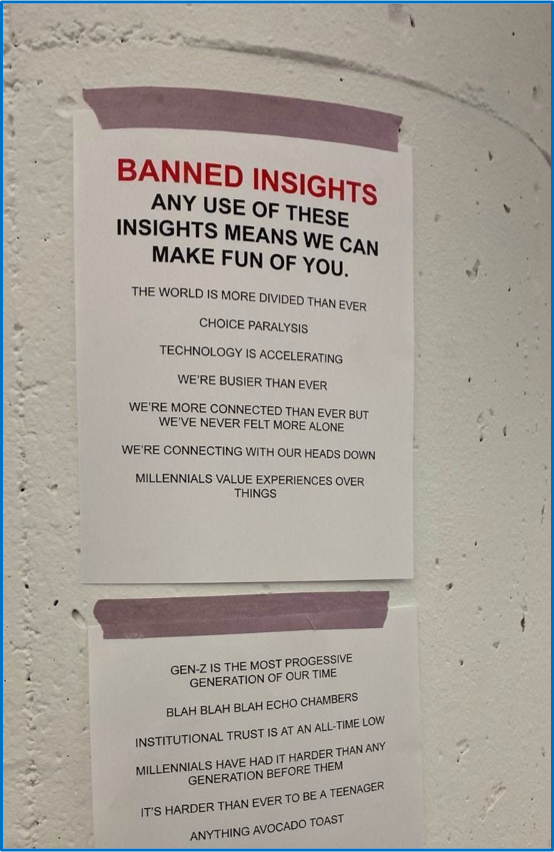
As we collectively enter our ambiguity era, these corp crutches no longer hold up.
It might be less about thought leadership than ambiguity tolerance.
Something like a Paradox Paradigm: accepting that contradiction is no longer the exception, but the baseline – and embracing the messiness of life rather than retreating into default shortcuts.
It may not be about the one-size-fits-all, but about responding to the right here, right now.
What is it, really, that prevents us from doing it?
Why corp crutches stick
Part of the answer might lie in what Bourdieu called hysteresis: when a system changes, old habits do not disappear overnight. They continue to shape how people think long after the world around them has moved on.
And move on it did.
Adam Curtis’s 2016 film HyperNormalisation already captured a world in which reality had grown so complex that the very sense of control began to break down. Ten years later, we are living through the age of the hyper-everyday.

As it grows messier by the day, uncertainty makes us cling even more tightly to old standards – even as they feel less and less adequate.
As actor Lars Eidinger suggested on the Reflektor podcast, we may be living in an age of “bipolar madness”: a culture pushing us toward simple binaries – right or wrong, good or evil – while life itself remains full of grey zones, ambiguities and contradictions.
Part of it also comes down to how we’re wired.
By nature, we tend to sort things into boxes. Our brains constantly produce automatic ways of making sense of the world: maximising clarity, minimising complexity. We read people as types before we encounter them as people – to borrow from Andrew Groves.
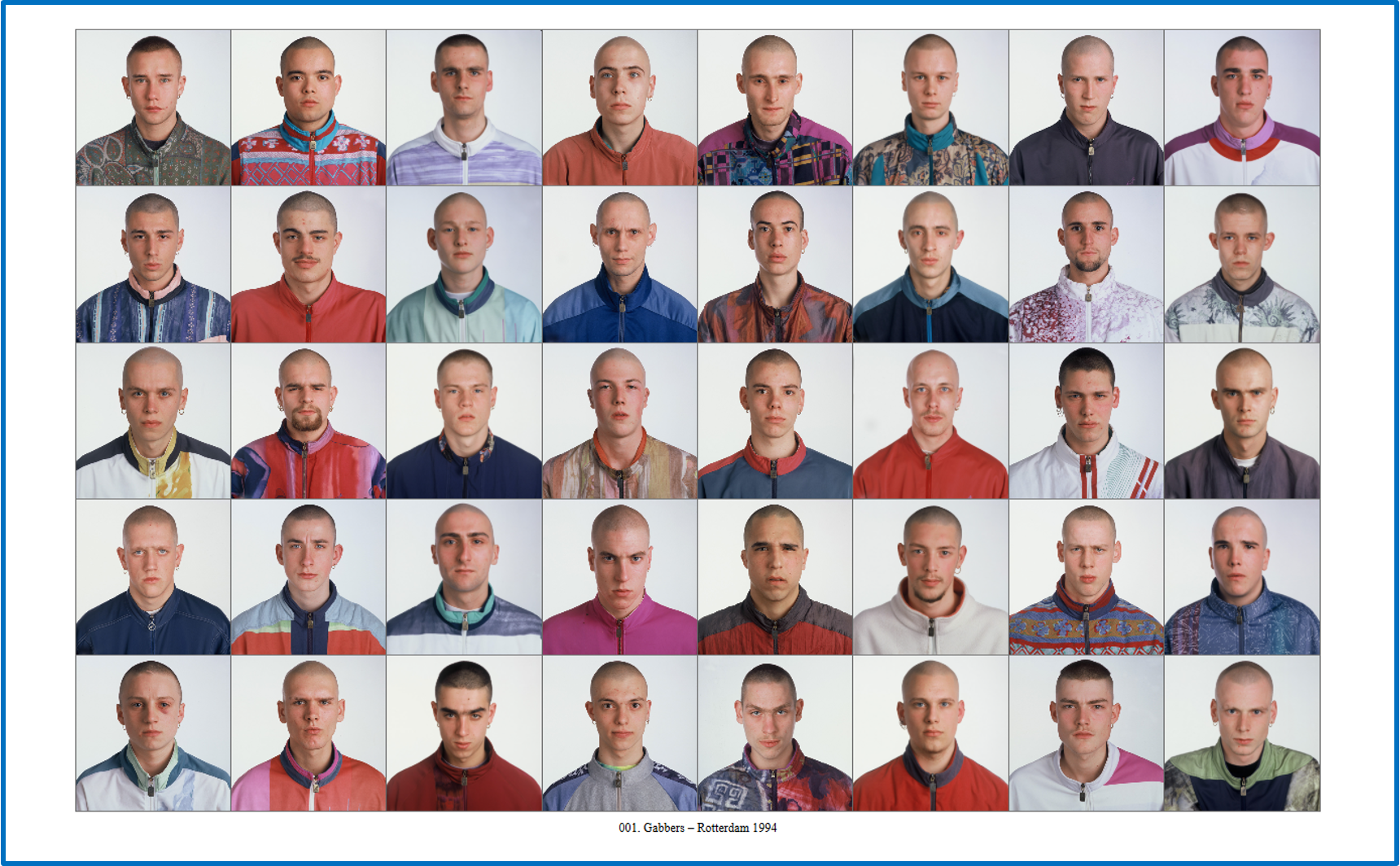
We’re wired to seek order. No wonder we cling to corporate crutches.
They offer easy defaults, but lead to dead ends.
They fail in three ways: mistaking hindsight for insight, labels for nuance, and claims for contradiction.
Why corp crutches fail
Hindsight over insight
To a hammer everything looks like a nail.
For almost any thesis, you can find numbers to support it. Once an album, brand or campaign succeeds, people post-rationalise the logic for why it was inevitable – with ChatGPT assuring everybody of their genius.
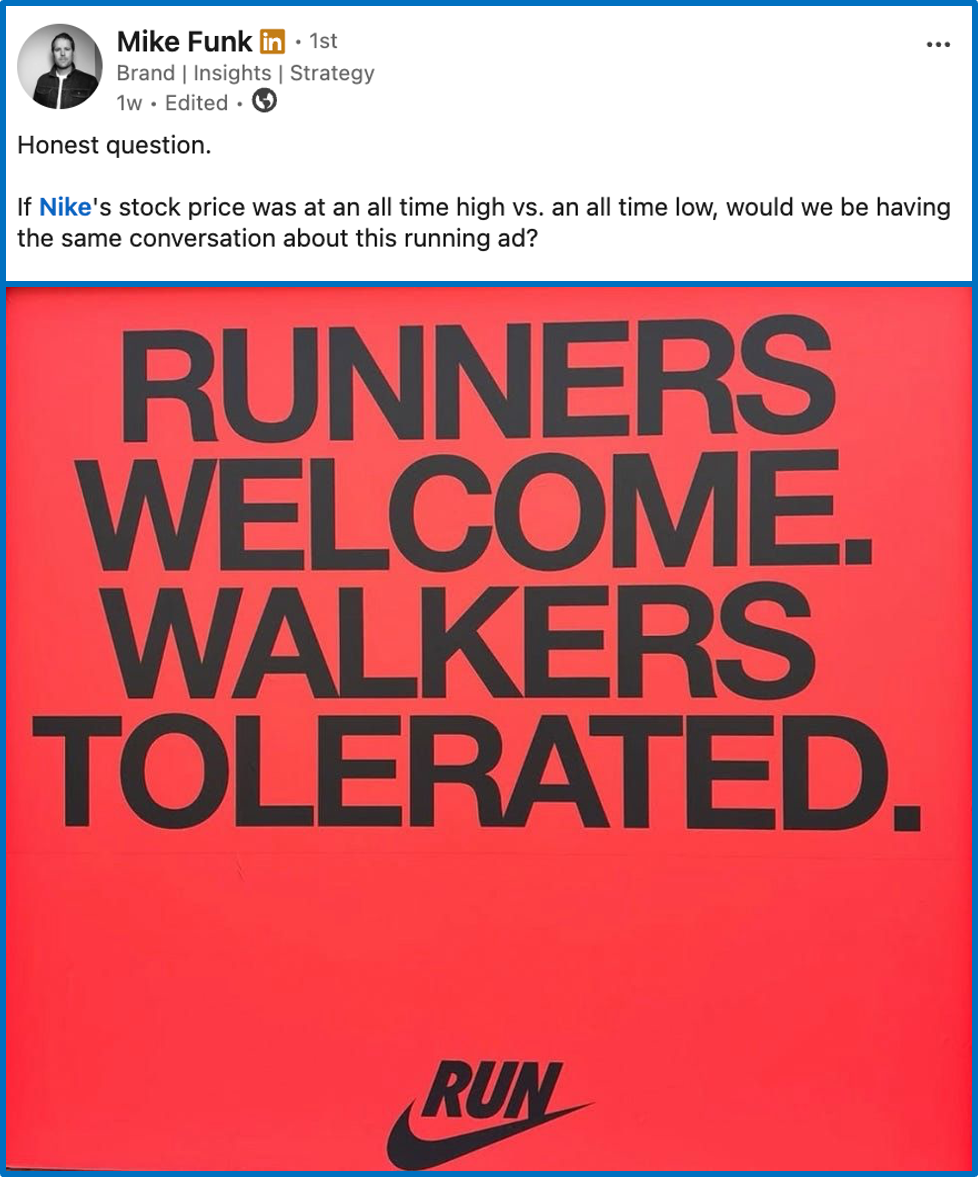
Everybody’s dissecting, nobody’s challenging.
As Joey Zeelen, founder of research agency ØUTLIER, puts it: “We’ve become so obsessed with measuring the hell out of everything that we’ve built an entire industry around the illusion of certainty. We’re drunk on false data that proves very little.”
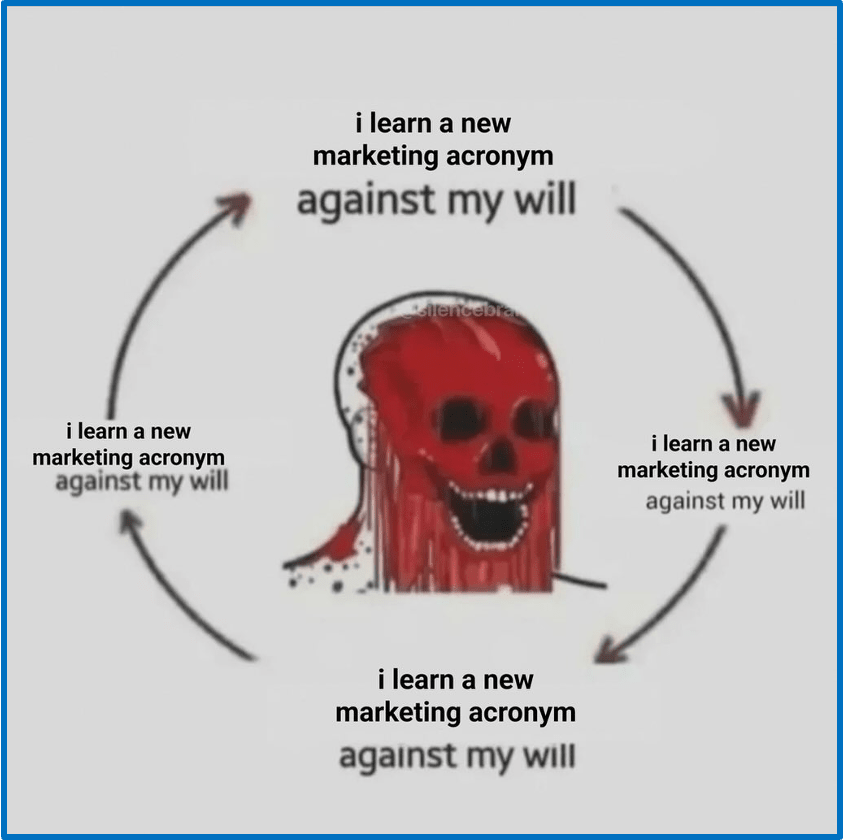
We numb ourselves with hard data, even though much of what lands as survey results is shaped by people answering in ways that align with their self-image rather than what is actually true.
That’s also Goodhart’s Law at work: once a measure becomes a target, it ceases to be a good measure. The moment “cultural relevance” or “Gen Z” turns into a KPI, it stops functioning as a useful lens and pulls you away from the very thing you were trying to understand in the first place. Brands overemphasise the target, lose nuance on the way, and end up tweaking surface signals instead of understanding what makes something resonate in the first place.

Paradoxically, the brands that shouldn’t work end up being most successful. As mfpen founder Sigurd Bank says on the Throwing Fits podcast, the brand does not have a single person working in marketing, yet it feels more culturally relevant than many brands trying much harder.
Labels over nuance
You can categorise people on the outside, but life’s deeper than that. Inside, everyone constructs their own reality. My friends and I might all wear the same Our Legacy denim, yet they still laugh at my YouTube Explore page.
It brings to mind Tyler, the Creator’s point about nuance and reference points from his Hot 97 interview: “do you realise the little bubble you live in is not the rest of the world?” Nobody’s right or wrong, but we all bring our own unique lenses to the things we consume, while still mistaking our own view for reality. We confuse our bubble with the world, when in fact it is only one version among billions – while neglecting life’s countless unknown unknowns.
Claims over contradictions
And the mess is only accelerating – hyper-polarising and merging at the same damn time, splitting into hyperniches while collapsing into the same feed. Everything everywhere all at once.
Office of Applied Strategy coined the term “horseshoe maximalism” to describe how extremes no longer necessarily oppose each other, but increasingly converge – producing new centres out of contradiction, and with them new cultural narratives.
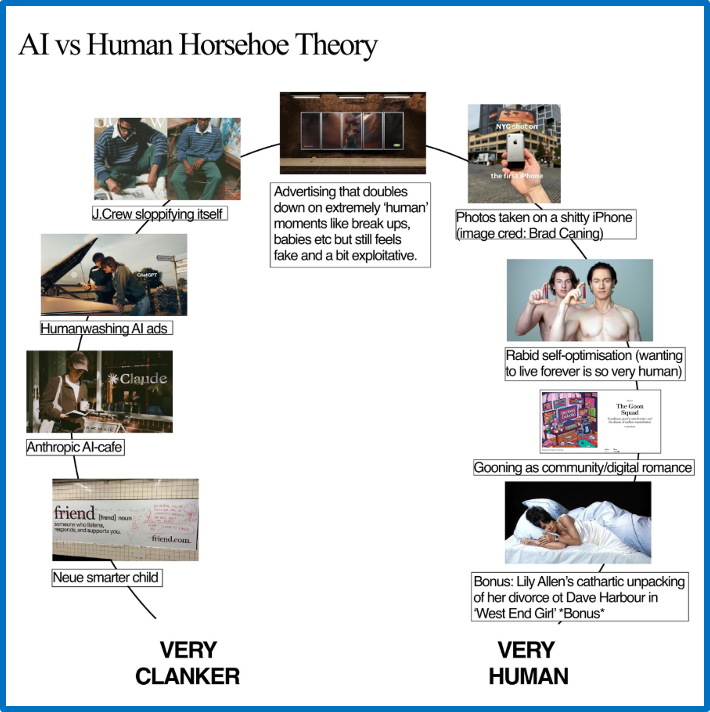
For every thesis, the opposite can also be true.
That’s not only true of culture. We’re full of paradoxes ourselves, so why do we still expect people to be neatly broken down? When everyone’s a multi-hyphenate, no one fits a single label.
I complain about the midness of culture and still daily choose Kodak Black songs from my 2018 Spotify Top Tracks instead of finally giving that Rosalía album a try.
I can make these bold claims on this very Substack about the state of culture and branding, yet still overthink sending follow-up emails to people I like.
I complain about platform decay, yet still stay up until 3 a.m. watching cutie Xing Xing.
Embracing the Paradox Paradigm
It might be about time to leave the corp crutches in the office.
Life’s too layered for lazy proxies.
Sense-making and complexity-flattening are not the same.
Strategy without context is just guesswork.
Thought leadership without judgement just clickbait.
Our old ways won’t serve us in this new space.
But when nothing’s certain, everything’s unwritten.
Excuse my lil hiatus. I’ve been busy lately — doing research support for Thom Bettridge’s CONTENT, recording my first podcast with Wesley from Nowhere Fast, and working on a few cute lil undisclosed mysterious projects, as we like to call them in Berlin.

I’ve also just gone freelance.
If you need support turning overload into narratives, I’m open for projects across cultural research, brand strategy and editorial thinking – from insight generation and audits to positioning and narrative development.
Short- to long-term: let’s chat.
Check out my profile here.

If you want a look into the Cosmos Werkstatt, take a look at the Paradox Paradigm Cosmos.
Loved this read by the MØRNING Substack on the contradicting forces in ourselves when it comes to ragebait content. You cannot fight something seeking for attention by giving it attention…

This Nymphet Alumni podcast episode with K-HOLE and Nemesis founder Emily Segal is a good listen – it also led me to the Youth Mode report.
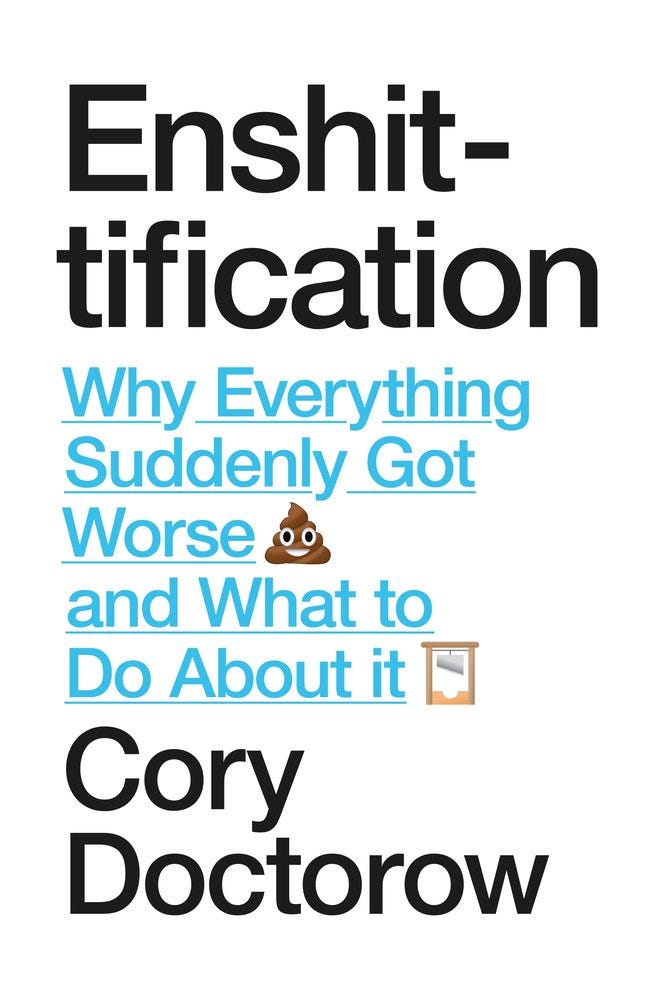
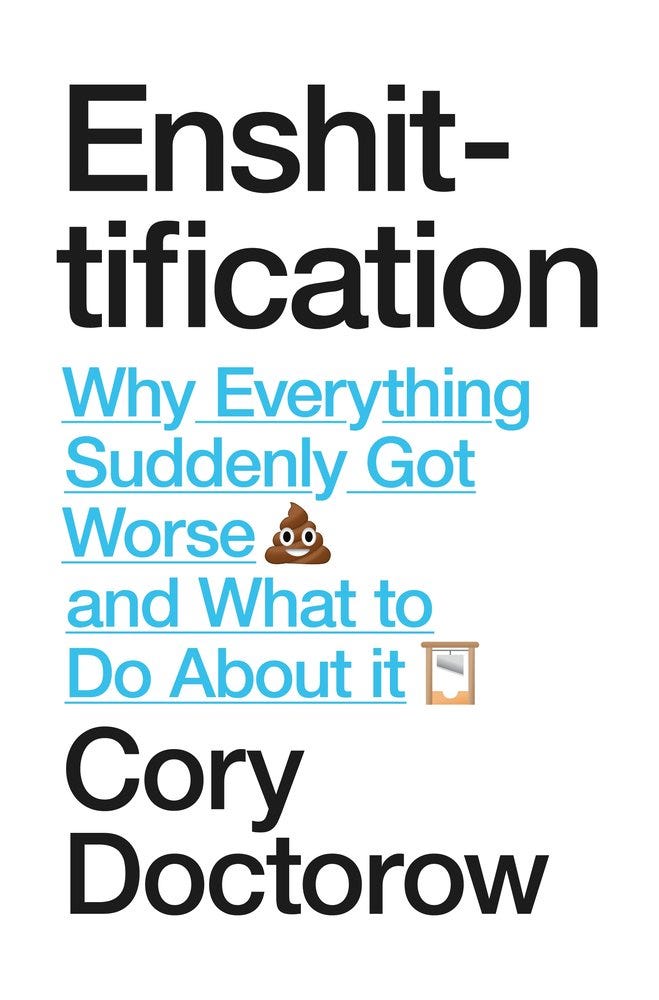
Also currently on my mind: Enshittification by Cory Doctorow — a very interesting book when it comes to what, and who, brought us into this messed-up, contradictory Paradox Paradigm. I’m usually cautious to call anything a ‘must’ read/have but this one explains so much of what’s going on rn so can highly recommend! Got Goodhart’s law from there.
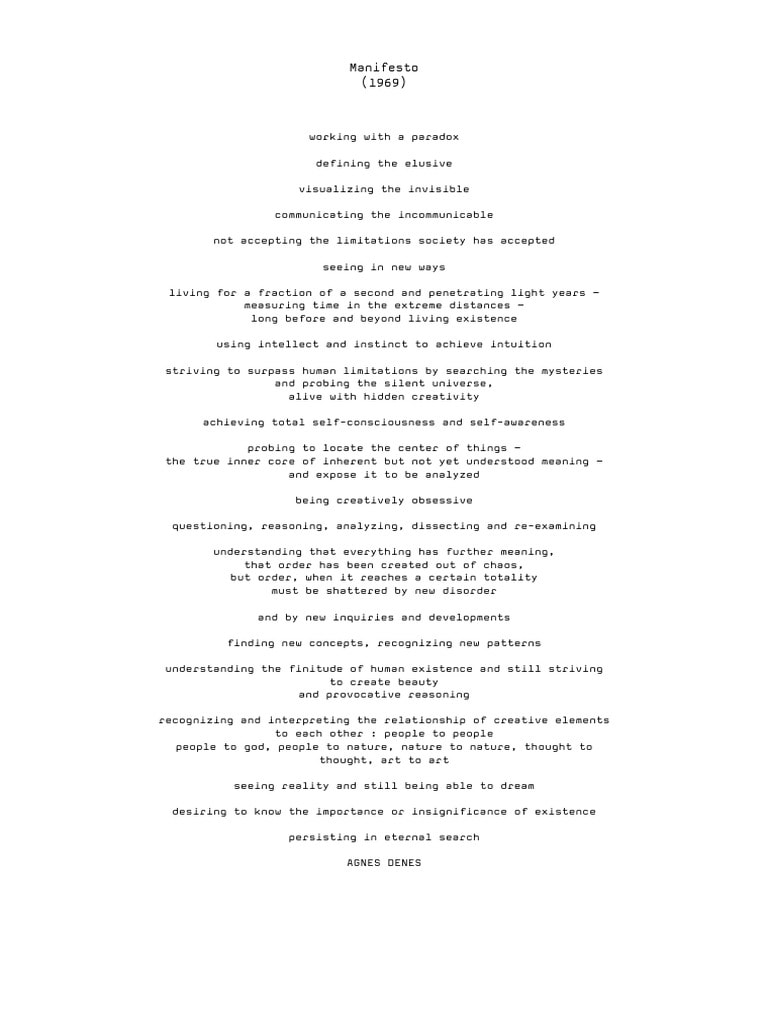
I’ll leave you with this by Agnes Denes, which I came across in 140 Artists’ Ideas for Planet Earth – kind of started this post (as it is basically the Paradox Paradigm after all)
Danke!
So true, and nice refs
Great read!