

Timeless is just another trend.
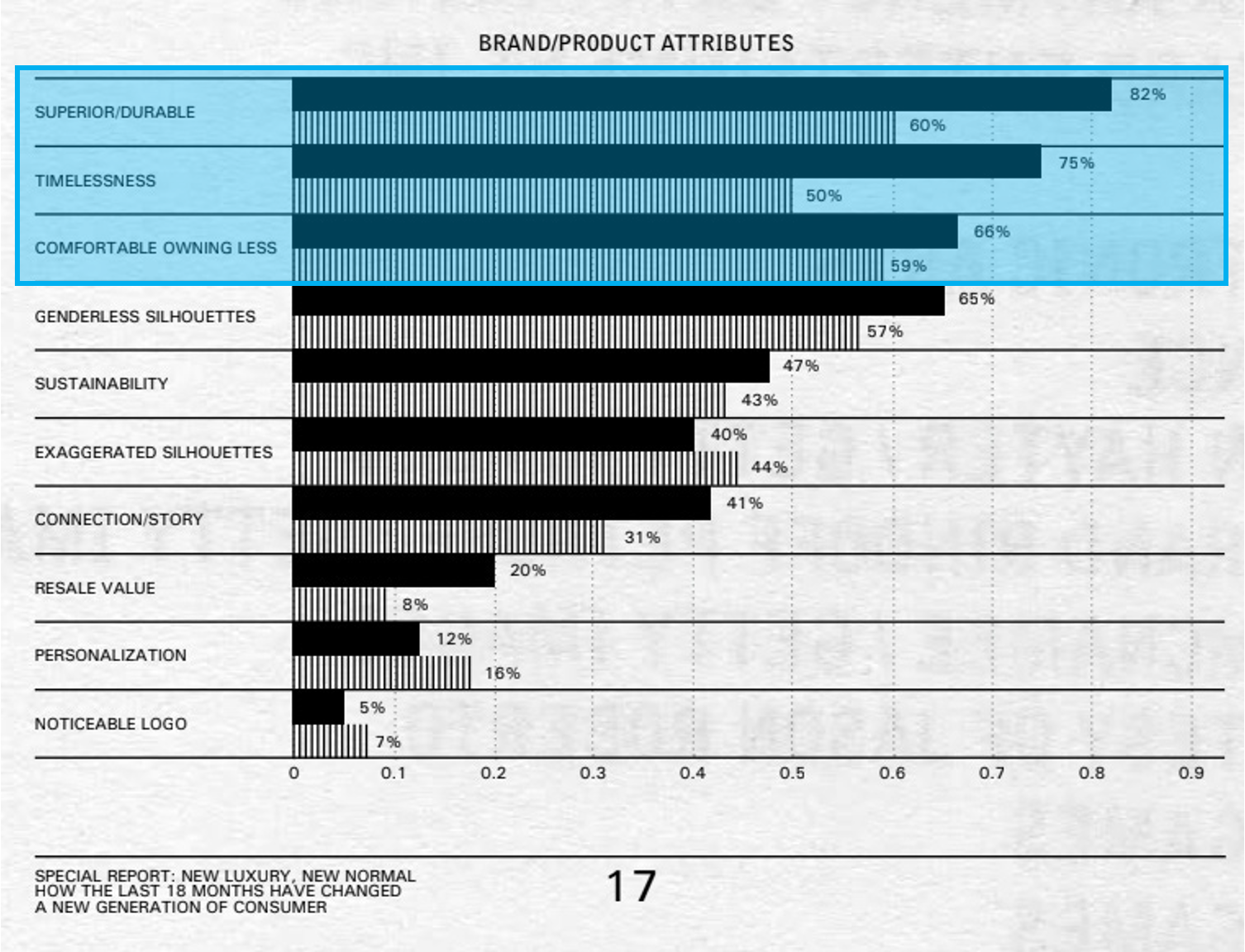
Faced with trend fatigue, the industry didn’t slow down – it just changed its framing. Longevity, but make it fashion. ‘Timeless essentials’ everywhere.
Across the fashion industry — from Loro Piana to Uniqlo — ‘longevity’ has become the new marketing default. Everywhere you can find an ‘everyday wardrobe’ – ‘easy to wear’ made of ‘timeless staples’ and ‘essentials’ ‘crafted’ and ‘built to last’. This is not mindful consumption – but clever framing.
After ditching logomania and a general increase in awareness concerning overconsumption, brands needed to adapt to shifting needs.
Vogue Business stated in 2024 that searches for ‘capsule wardrobe’ increased by 60% in the last 12 months, whereas searches for ‘uniform’ were up 42%. Already in 2021, Highsnobiety noticed changing preferences in their early adopter fashion crowd fueled by the pandemic. Their latest report states ‘luxury shoppers are smarter than ever – and they want their clothes to be, too’.
Now, the latest Lyst Index for Q2 2025 shows the result: basics are trending — Skims’ white tank top ranks #2, while Adidas’ Sprinter Shorts take #3 among the world’s hottest products.

While the numbers prove it, you can also see the revival of the staple everywhere. Kicked off as norm core, transformed into quiet luxury, and now morphed into what Dazed has called bluntly ‘basic fashion’.
And brands are hopping on it. JW Anderson is ditching seasonal collections and fashion week for ‘luxe wardrobe staples, jewelry, sunglasses, art, craft and items for the home’, as Dazed cites. New challengers like 925 Originals or index (which I personally love) are entering the market with simple, everyday clothing.
Still, we need to be careful not to mistake ‘timeless essentials’ for mindful consumption. Why?
Understated elitism
As I wrote in my last Substack, clothing is always a status signal, no matter how clean your look is — this is simply the latest evolution. To flaunt cultural capital, the cues have become quieter: from a Supreme Box Logo to a plain Merz B. Schwanen tee. A subtle flex is still a claim to status through cultural codes, meant to separate those who can read them from those who can’t. Databutmakeitfashion just wrote a great piece on this, too. Meanwhile, I’m happy my denim has a third stitch on the pocket — just enough to show they’re Our Legacy to those who know.
Consumption loops
After spending €80 on a white tee, you’ll want everything else to match — your other clothes, accessories, gadgets, even your interior. That’s the Diderot effect: the impulse to buy more so your world aligns with your latest purchase. We crave consistency in attitudes, behaviors, and the objects around us. To resolve cognitive dissonance, we keep buying. Your faded Dickies suddenly look out of place next to your new Lemaire loafers, so you ‘invest’ in a fresh pair. You keep ‘acquiring’ (not overconsuming, of course!) and ‘accumulating’ (not hoarding) in pursuit of the perfect wardrobe (which doesn’t exist).
Evolving essentials
On top, even so-called ‘timeless style icons’ fall in and out of fashion. The Timberland boat shoe, for example, went from Sylt-old-money symbol to streetwear ‘staple’ — and will soon be just another ‘so 2025’ relic in the churn of cultural codes. Each time, it makes way for the next product to be framed as a ‘must-have in everyone’s wardrobe’ — which, let’s be honest, no clothing item ever is.
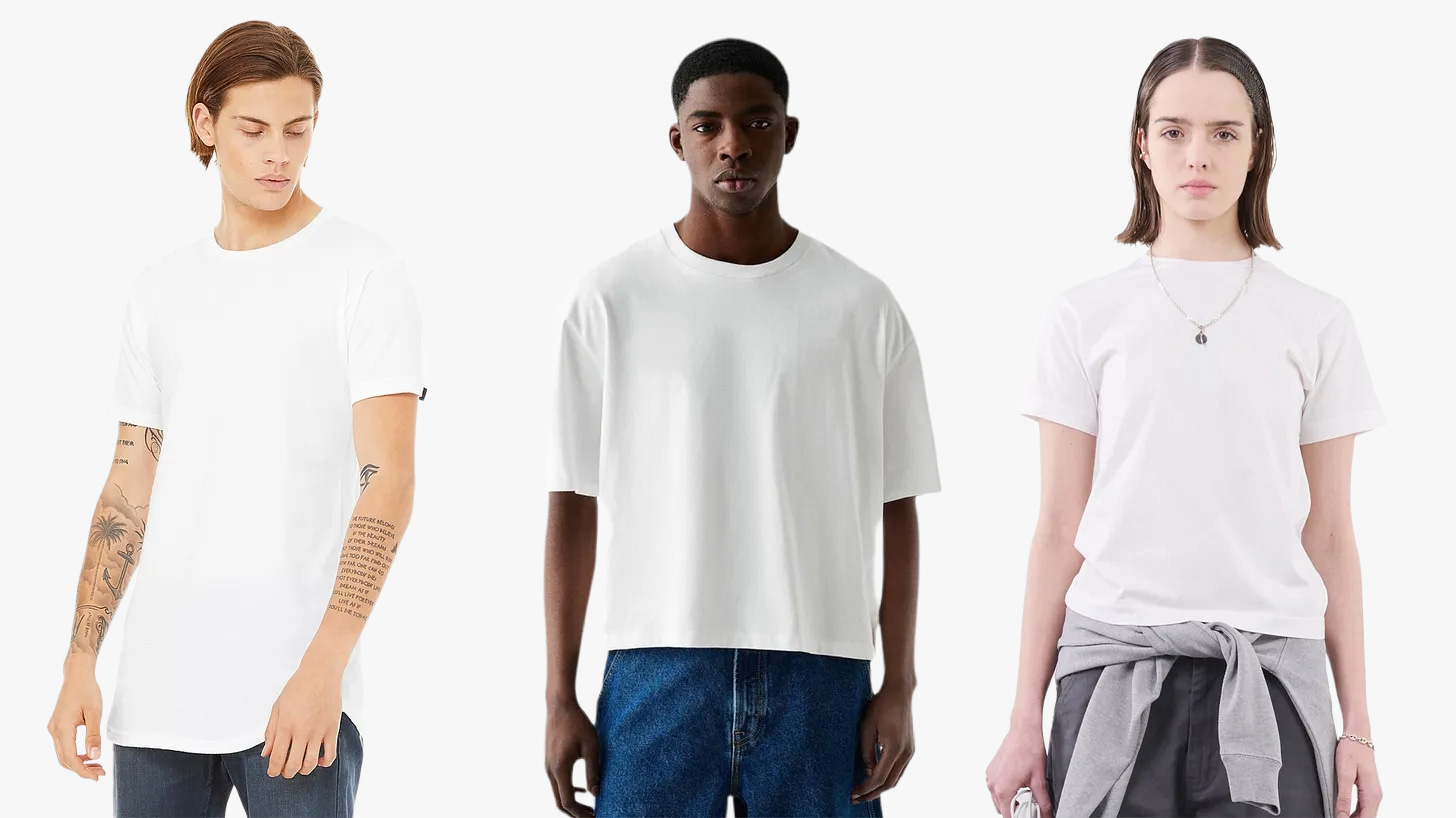
Even at the category level, nothing is forever. The criteria of the staple are always changing. A few years ago, the perfect basic was elongated (in the darkest time, with a zip at the bottom), then the shift to boxy cut, and now we’re in the era of tiny baby tee.
Same for the perfect denim: from baggy to loose with a flare, slowly morphing back to skinny once the Indie Sleaze movement kicks in at full effect and dethrones Y2K.

Still, people (myself included) get lost chasing the perfect capsule wardrobe. We forget that, whether we like it or not, we’re influenced by trends — slowly, subtly, constantly. Six hours a day online, and it’s no wonder our taste shifts with whatever’s trending. A year later, your ‘new me’ purchase turns out to have been just another phase.
Cultural flattening
And these days, we all tend to move through the same phases, because everything starts to look the same. New labels often just repeat — not even recycle — established silhouettes, as I wrote before. Do we really need the twelfth iteration of the Carhartt Detroit jacket? Luxury pushes this to absurdity — reissuing archetypes and selling them purely on heritage and prestige pricing. The result: innovation fades, and distinct style codes collapse into a single, Western-centric style uniform.

Sum
Timeless clothing is just clever framing.
Still, the illusion of completion sells, especially when labeled ‘essential’.
But every buzzword comes with an expiration date. Slowly but steadily, framing products as ‘everyday’, ‘high-quality pieces’ creates a sea of sameness — it’s the hygiene factor. Just as sustainability lost its edge — becoming almost synonymous with greenwashing once every brand adopted it — ‘built to last’ now needs something more.
People are catching on: simply talking about craftsmanship is no longer enough, which is why many high fashion brands are struggling today. Matter also states that ‘the dissonance … between genuine brand promise and the reality of customer experience – is hastening luxury’s cultural irrelevance.’
Don’t get me wrong — I love a good basic, and brands truly investing in quality. But there’s a clear difference between those building longevity into their products, and those using timelessness superficially as convenient marketing prop to justify price point.
For the brands that genuinely deliver, few implications stand out.
Go beyond ‘longevity’
Everyone pushes the same message – invest in what differentiates you. Conkers, for example, roots his staples with a distinct identity rooted in slow British countryside life. Timelessness isn’t just told — it’s felt across the brand’s look & feel. As Thom Bettridge puts it: ‘Stop thinking about the stuff you’re saying (Info-Sharing) and start thinking about everything around it (World-Building).’

Make quality visible
If you want to communicate quality, make it tangible. Share behind-the-scenes moments, fabric close-ups, and the makers themselves. Story MFG’s BTS account turns craftsmanship into both proof of quality and a source of intimacy — making the brand feel more real and relatable.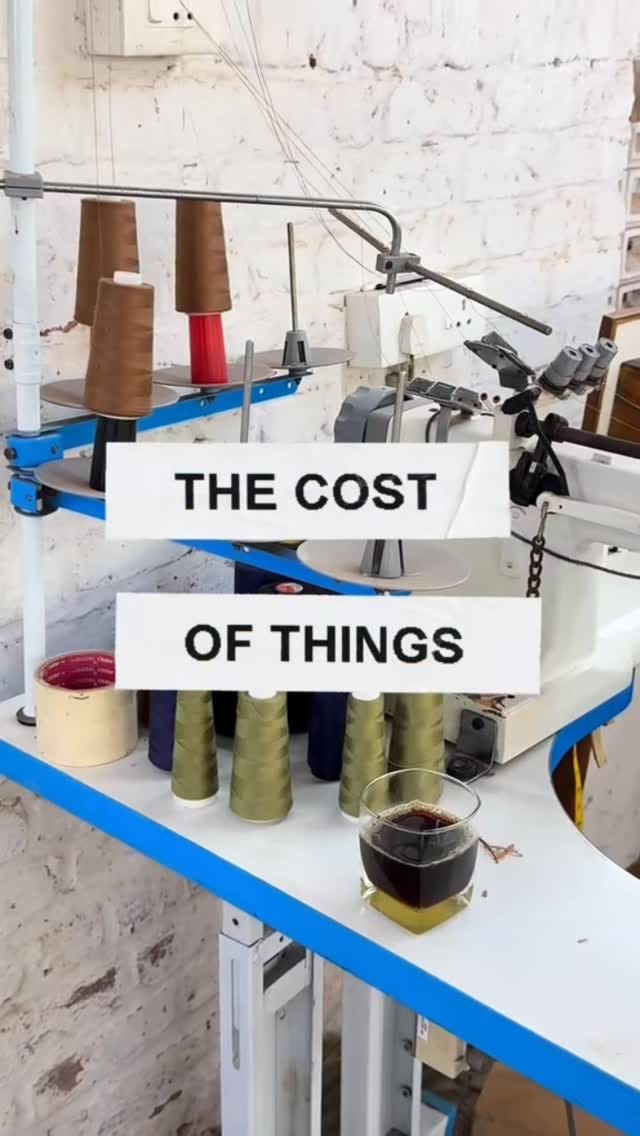
Walk the talk
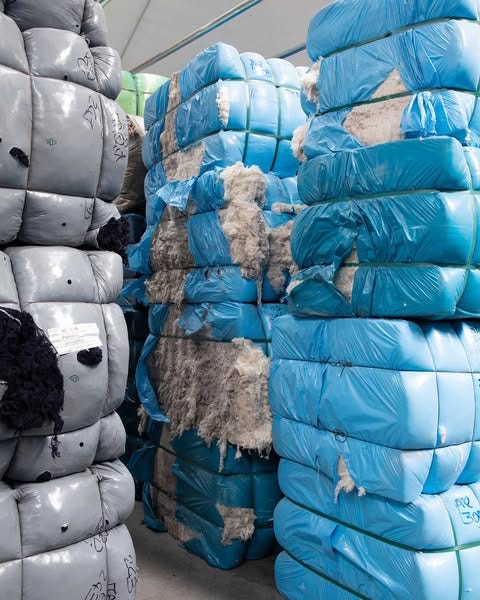
Longevity should be more than just a marketing message – it should be intrinsically embedded in the core business model. As highlighted in the ‘Ordinary Delusions’ Substack, mfpen prioritises quality over quantity, crafting minimal, well-made garments from truly responsible materials – from deadstock fabrics to recycled and biodegradable fibres – reducing impact at every stage and valuing core principles over unchecked growth.
Longevity isn’t the problem.
Living up to it is.
I'm unfashionably late to this piece, but it still holds up well 😉 Obviously this whole 'timeless' and 'essentials' stuff is just normcore all over again, but this time with a little more greenwashy positioning, as you've pointed out yourself.
What's interesting about the original normcore (i.e. before it was mis-appropriated by brands as an aesthetic) was that it was meant to be an idea, not a look. The idea was to reject individualistic self-expression (i.e. trying to stand out by being different to others) and instead opting into sameness to connect with others better. "It finds liberation in being nothing special and realizes that adaptability leads to belonging" (to quote the actual report that coined it).
The report itself actually rejects the idea of "appropriating an aestheticized version of the mainstream". So in fact normcore originally meant "doing as the Romans do".