

If everything’s "iconic", nothing is.
The flat flex syndrome.

Don’t we all just want to feel seen?
Clothing is one of the easiest ways to do that.
We tell ourselves it’s our unique self-expression. Most of the time it’s just signaling that we know what’s on the right mood-board pages this week.
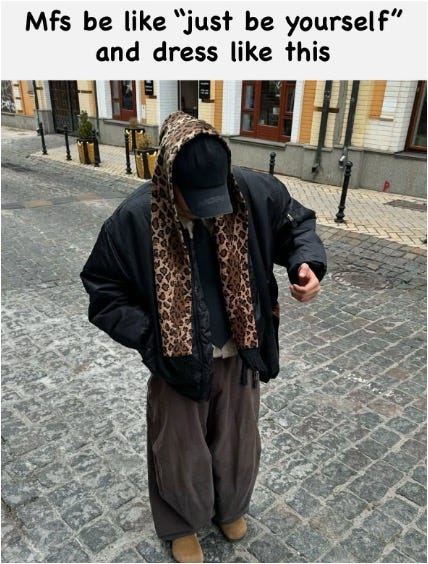
Along the way, we sometimes catch ourselves wanting the label more than the meaning – a flat flex.
We tell ourselves we’re searching for individuality – but most of the time, we’re really searching for belonging.
After all, our “personal style journey” doesn’t happen in a vacuum.
Group over taste
As social psychologist Tajfel argued, we mainly act as members of groups. We separate the out-group (the ‘NPCs’ in Kith) from the aspired in-group (the ‘tastemakers’ in Our Legacy). From your peers you get validation, belonging, a sense of safety. While everybody just wants to be ‘special’, it is always a matter of uniqueness vs conformity – and the latter often wins.
Even Basquiat – one of the rudest boys, with outrageous, distressed, paint-splintered clothing – went for designer, because “Comme des Garçons was the place he felt his language understood”, as Charlie Porter writes in What Artists Wear.
In this sense, clothing is the prime signifier of group membership.
And honestly, that’s not just a bad thing – connecting through fashion can be beautiful.
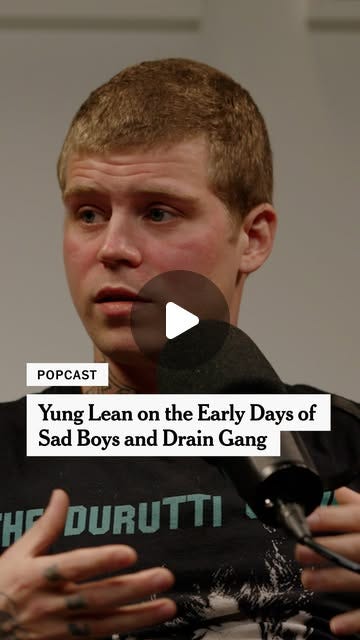
Yung Lean recalls meeting Bladee through BBC and Gucci Mane shirts and reminisces about the “Avengers-type energy” of their early crew.
I also met one of my close friends because of a Cactus Plant Flea Market cap I bought on Grailed in Groningen, my little student city with a pretty low ratio of streetwear heads. You’ve probably had that moment too, when the right piece, worn at the right time, sparks a connection.
Funny how something so superficial can trigger something real.
Brands over clothes
Always true, increasingly amplified – the story around the shirt matters more than the shirt.
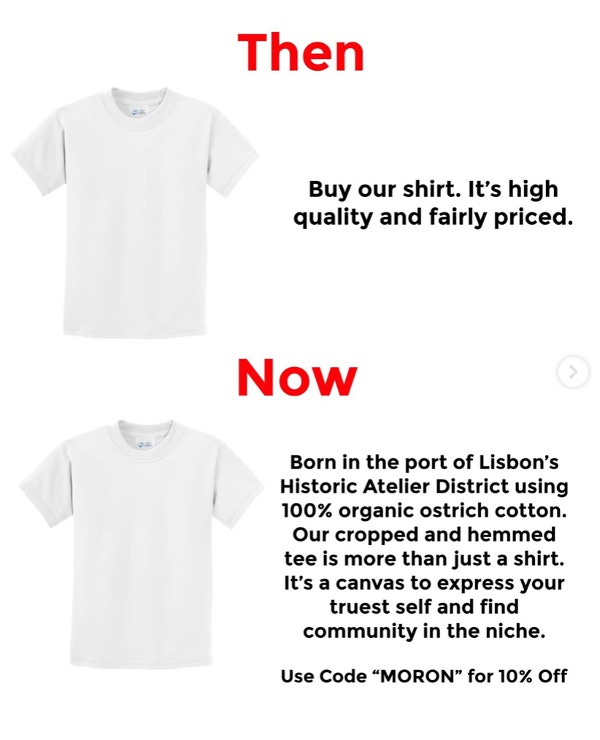
In their 20th-anniversary issue, 032c describes how, in the 2010s, “streetwear was restored as living media: a social object connecting the wearer to a specific world, and as garment-as-content platform through which to publicly comment.”
Your pants are the message.
Once a vessel for subcultures, now a brand-world token.
And paradoxically, the bigger these universes got, the quieter the logos became.
From logomania to IYKYK iconography – subtle cues only visible to those who know. To signal belonging, you can’t scream; you hint. The hoop on your Jacquemus pants, the pink label on the Acne Studios denim – you name it.
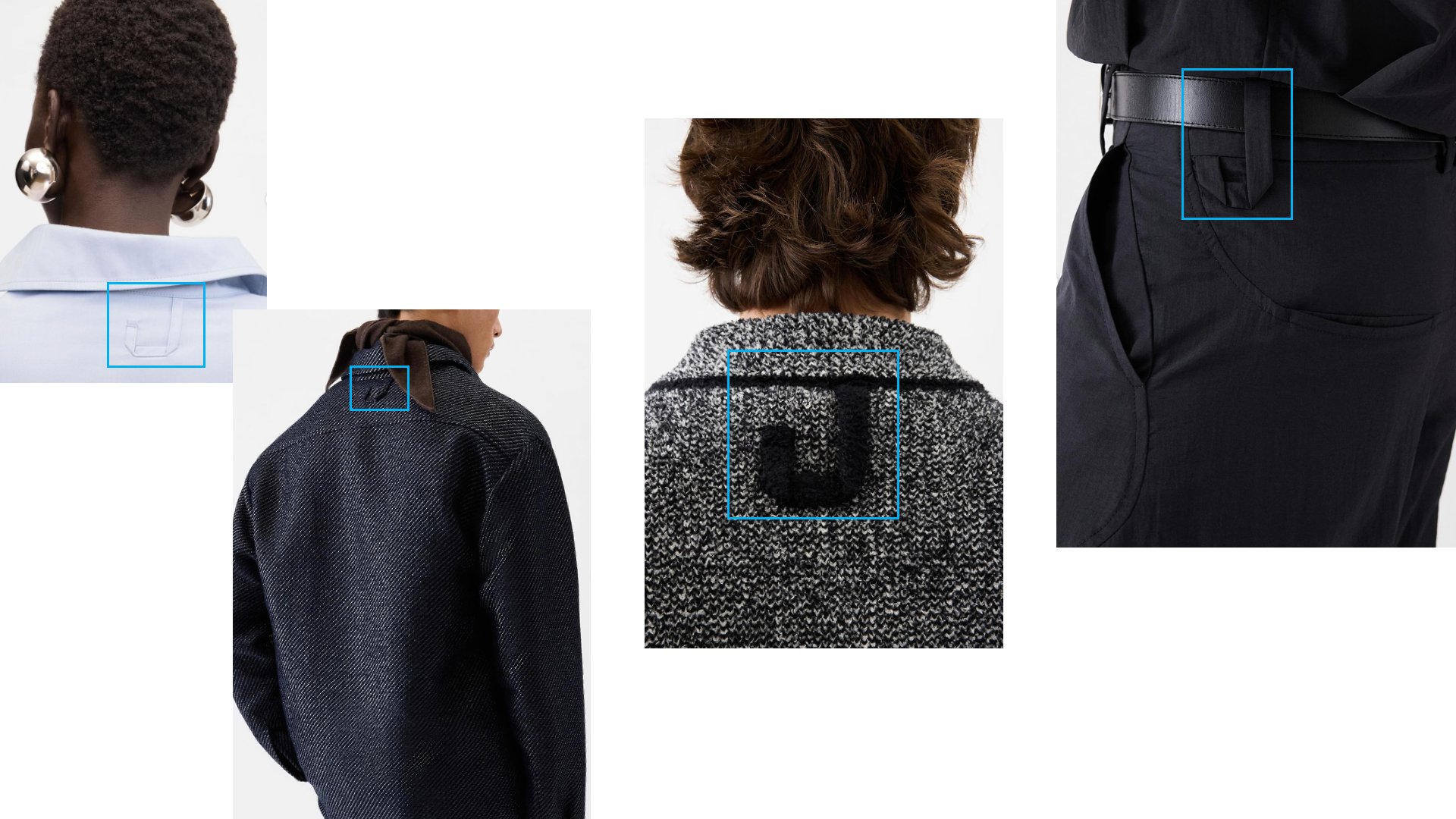
The quieter the logo, the bigger the flex.
Why? You signal group belonging through plausible deniability – subtle between-the-lines talk. Both sides know exactly what’s going on, no one says it aloud. Expose the code too clearly, and it becomes a scream for attention.
Hence – with the rise of subtle cultural-capital luxury – the IYKYK logo became the default.
One of the earliest came from one of the quietest designers: Margiela.
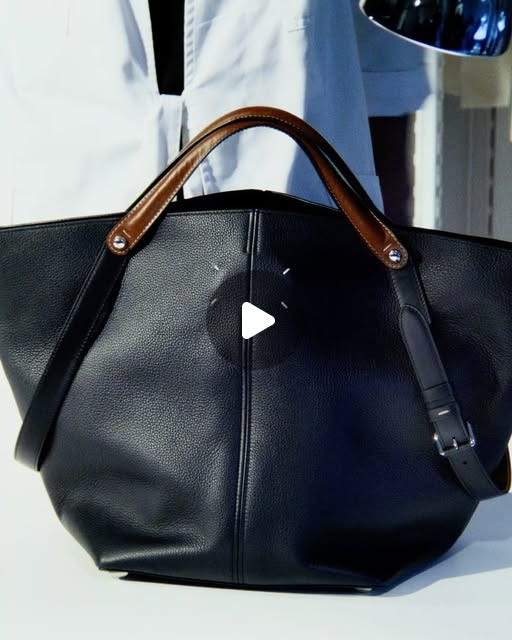
The four stitches began as an anti-logo stance and became a quiet myth of progressiveness and craft. As long-time communications director Patrick Scallon explained in Wallet Magazine:“Martin just wanted to focus his efforts and talents on what he was very good at.” Commitment over visibility – and paradoxically, that’s what created visibility.
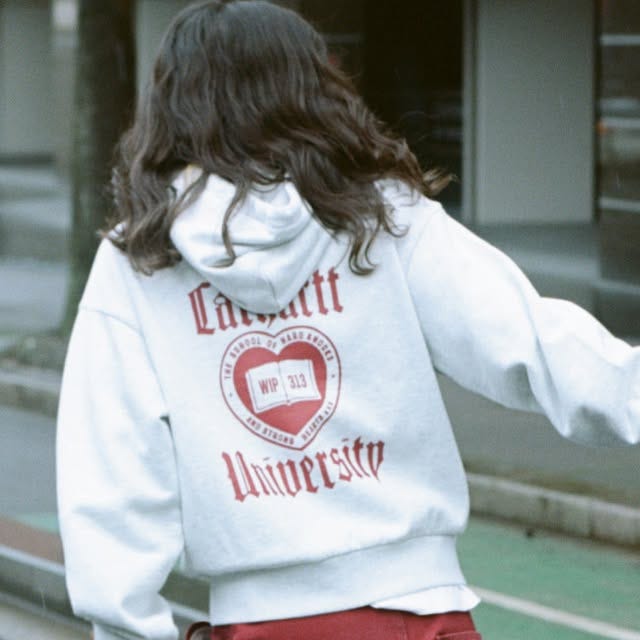
Today, the IYKYK logo is everywhere: Bottega’s renewed focus on the Intrecciato, Acne Studios’ Face logo, Carhartt WIP has revived the heart motif from its workwear archives.
Fads over fashions
We communicate through clothing – who you want to be, where you want to belong. Nothing new.
But in 2025, most of it feels like small talk: shallow and instantly forgettable.
That’s the irony: as clothing becomes pure signifier beyond product, the depth of the message shrinks. The knowledge flex trumps the meaning – the cachet over the context. W. David Marx described it well: most fashion trends are not even trends, they’re fads – existing solely because of their novelty and stripped of any meaning. They basically say nothing beyond “I know what’s on hidden.ny right now.”
When novelty is the only currency, depth dilutes.
The flex itself becomes the whole message. You’re dying to get your hands on the Marty Supreme jacket a month before the film is even out (because Frank wore it!!1!).
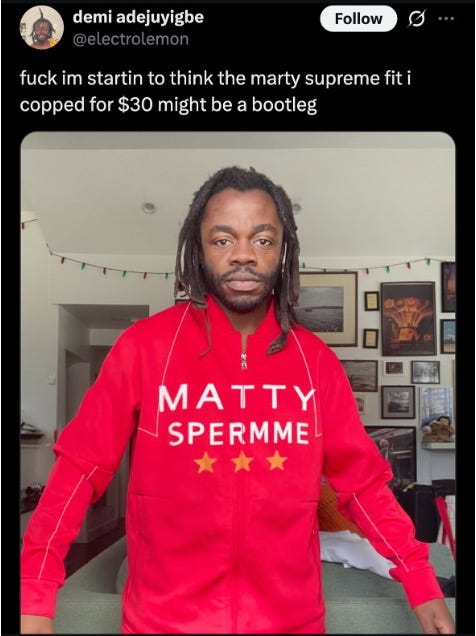
That’s the flat flex syndrome: you want to belong so hard you just want the code, not the context. It’s no longer about the values or worldview behind the product – just proof that you’re up to date, for the right people to recognize the reference.
Flex over myth
There are layers to this.
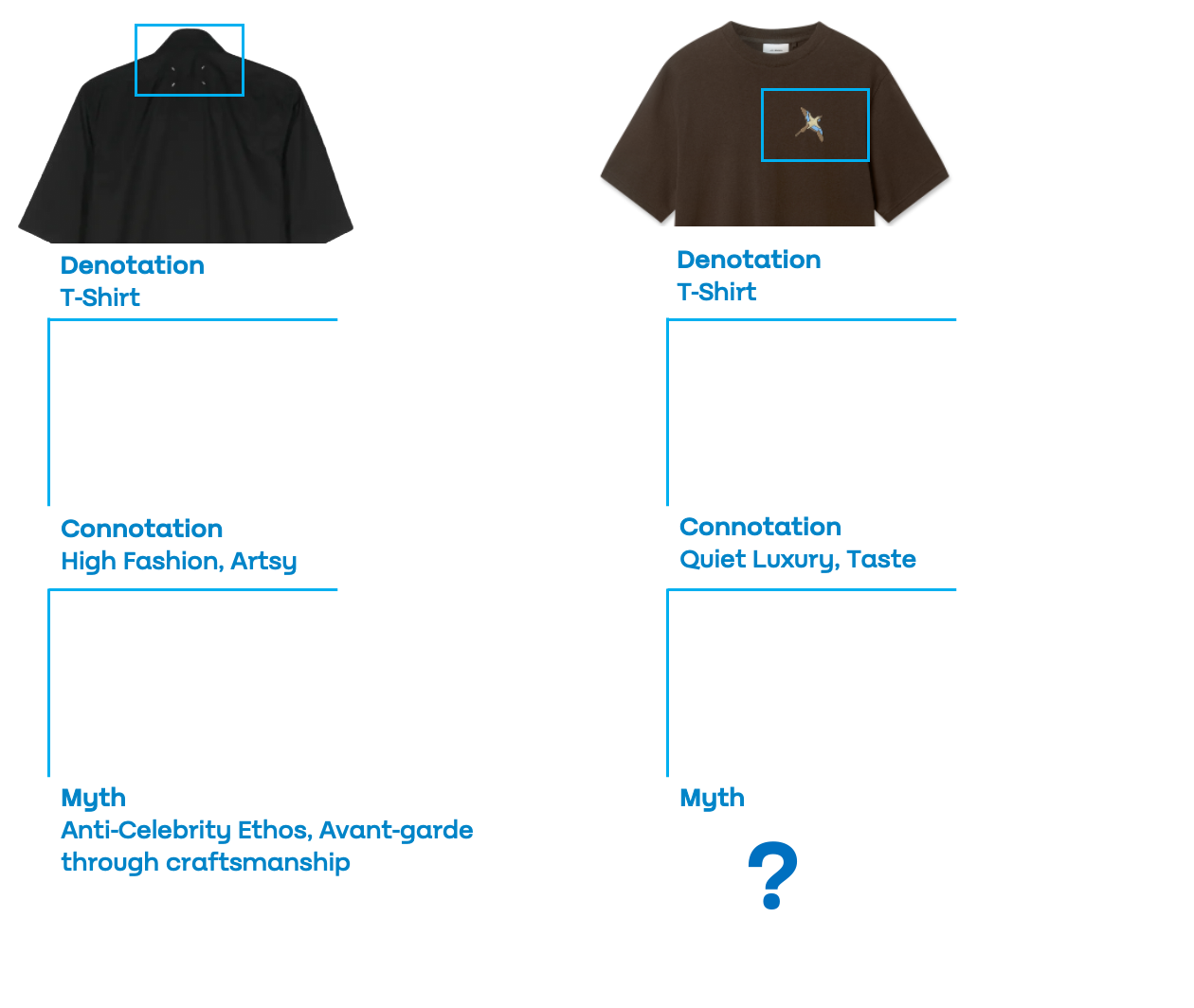
Barthes divides the meaning of objects into three levels: what they are (denotation), what we associate with them (connotation), and the deeper worldview behind them (myth).
The best brands build myth – a unique ideology – slowly, through repetition and consistency, campaign after campaign. Think of Stüssy’s tribe mentality, Supreme’s 90s New York nostalgia.
But as connotations outweighed the denotations, myth-building dissolved.
The Axel Arigato bird iconography often feels more like a generic “I’m into fashion” badge than a distinct worldview – because the brand keeps shifting between trends without a coherent identity running through product and communication, from thin-soled, early-2000s Prada-ish sneakers to chunky, Common Projects-like sneakers. Aesthetically pleasing, very Zeitgeisty – but it doesn’t quite build the kind of lore that stitches its products into one coherent world.
Status over connection
These days, few brands have myths.
Iconography jumps from niche IG moodboards to Explore page within days.
And once a symbol becomes too exposed, it loses desirability – from early adopter symbol to laggard stigma within two drops.
Overexposure ruins everything. As PR strategist Gia Kuan notes in Wallet Magazine, success often means losing the very conditions that let you grow in the first place.
Last year you were desperate to get your Stone Island “badge in” for your IG fit pic, now you take it off once you see it on a footballer jumping off the team bus – and you’d rather let the two buttons do the IYKYK flex. From subculture code to status flex – because most were never as committed in the first place.
Similarly, your Rier quarter zip ends up on Grailed because you’re cringing at the ‘quarter zip and matcha’ TikTok-ification of it.
We hop from brand to brand, each stint more shallow – no wonder we’re fatigued by the hype machine.
In 2013, Supreme had such a strong myth that people like me crowded into Facebook groups, connected through shared interests with people all over Europe, and boosted the brand’s lore.
Myth pieces make a statement – you can connect with the wearer on a deeper level. If you wear your clothes for the quick flex, it doesn’t say much at all – it becomes more of a shield than a gateway.
We’re not connecting, we’re just broadcasting.
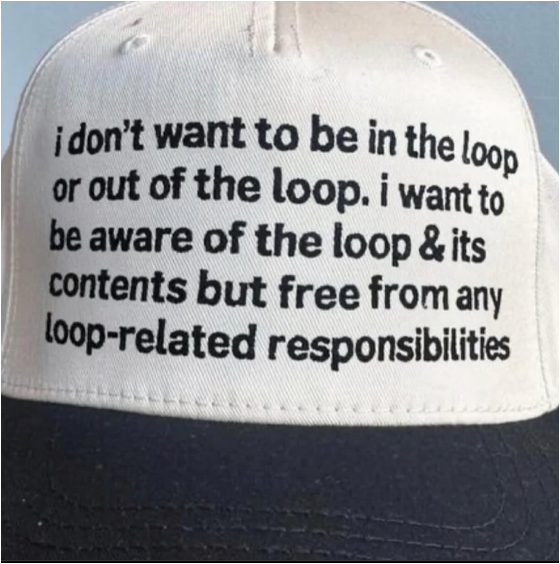
Brands don’t help themselves: many chase the Zeitgeist instead of developing their own signatures. And without consistency, mythology dies before it’s born. Logos used to be door openers; now there’s often nothing behind them.
Mythmaking 101
So how do you find the sweet spot between being seen and being burned?
Stretch the flex through rich vocabulary. Stüssy’s myth keeps surviving because it’s so damn giving. When the 8-Ball is overstretched, they can pull from decades of symbols – bring in the dice, the bent crown, the curly S. A walking case study in how to keep a myth alive.
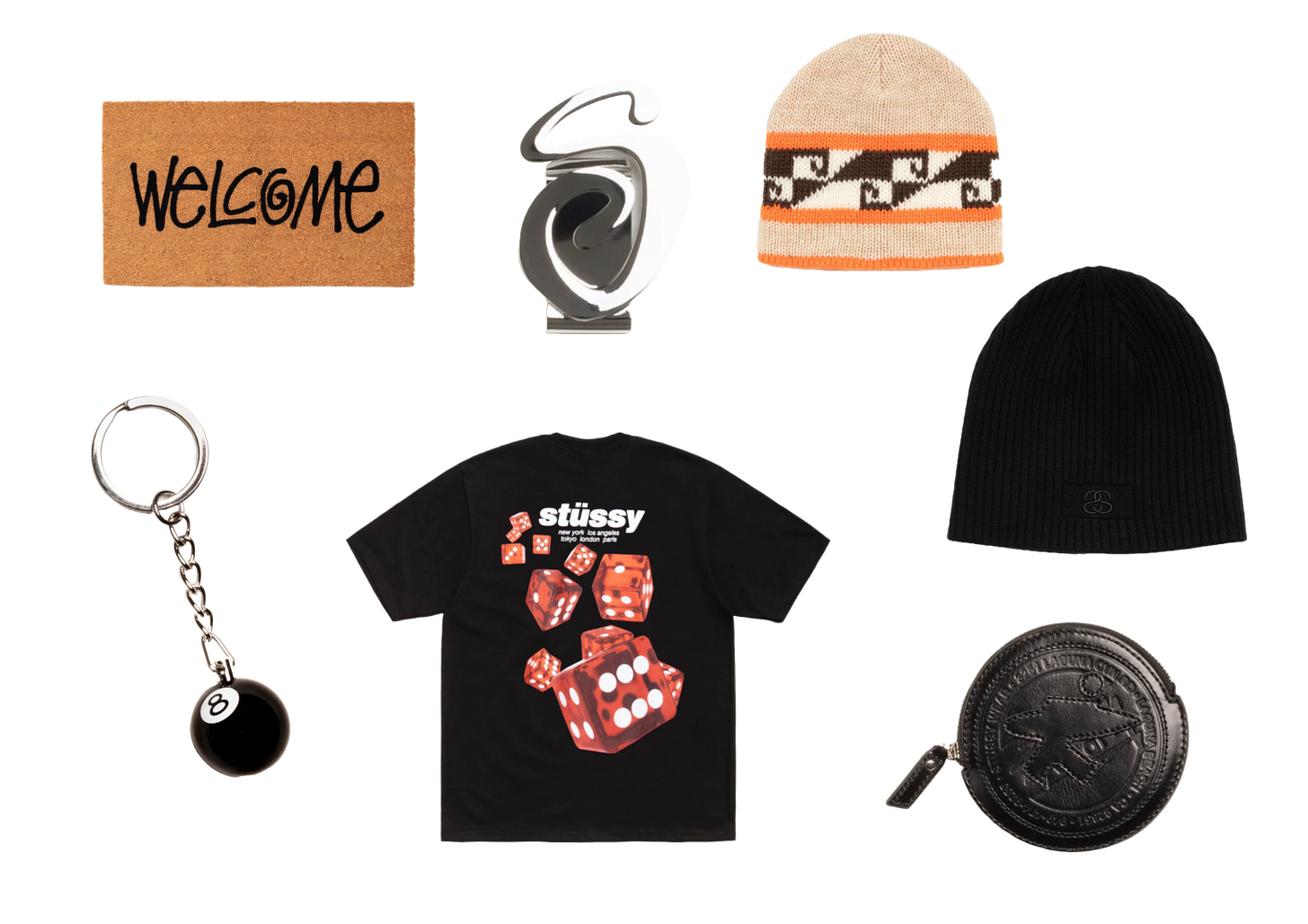
Source: Stüssy Mute the flex through subtle codes. Body of Work goes for consistency over visibility. Quiet cues through a signature shade (Loam Brown) – also used in their Mephisto collab – and a strong, consistent core of values — refinement, understatement, persistence. Recognizable for insiders, invisible for outsiders. Low exposure, high meaning – a myth in the making.
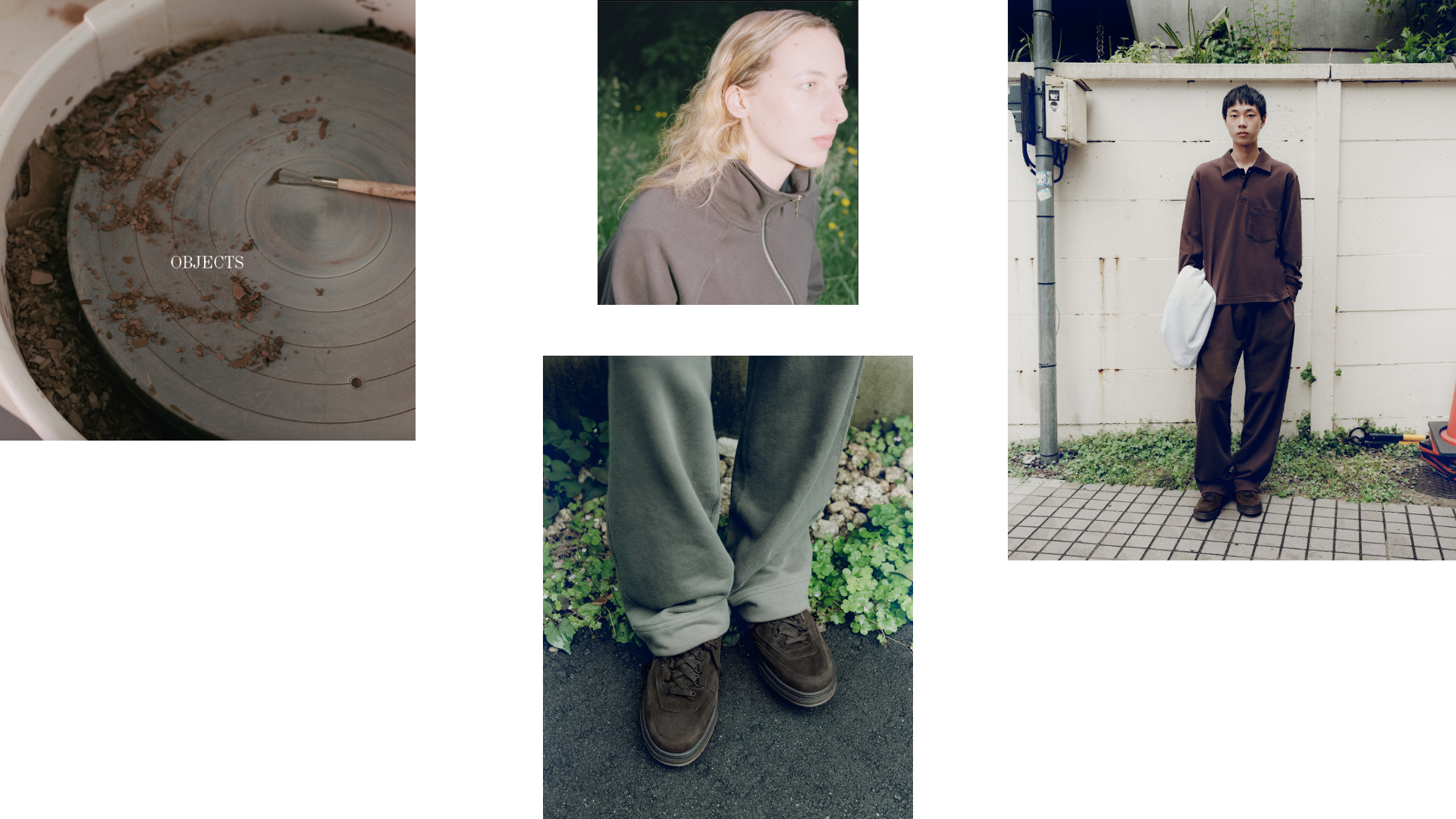
Ground the flex through strong visual narratives. Lady White Co’s core is the most neutral piece of clothing you can go for: a white tee. How can you build a myth with something so clean? Through context. The ongoing “LW101T” editorial shows them in ever-new environments but with a consistent visual language – rough brutalist chic with a slight surreal touch. On its own, the white tee is a floating signifier, open to different interpretations – but the mise-en-scène charges it up.

Substance
Today, signals lose cachet faster than they can build meaning. In a culture obsessed with being seen, brands burn through iconography before it can collect any real depth.
In the end, signs only last when they’re built on substance. No wonder “IP” – a brand’s intellectual property – is slowly replacing “cultural capital” as the IG Reels buzzword of choice.
A strong identity – POV, tonality, values, an overall way of doing things – is key when everyone is so loud yet so similar.
Myth takes time – but it builds meaning and creates connection.
If you really want to be seen, you’ve got to go deeper – or keep chasing the flat flex.
Source code
Research cosmos:
If you dare to take a raw, slightly unhinged look into the ‘Werkstatt’, take a closer look:
https://www.cosmos.so/substanz/flat-flex-syndrome
W. David Marx – Only Fads: A Culture (and Economy) of Labubu
https://culture.ghost.io/only-fads-a-culture-and-economy-of-labubu/
Noah Johnson for Highsnobiety – Why do we destroy good brands?
https://www.highsnobiety.com/p/why-do-we-destroy-good-brands-the-row-sample-sale/
The Plug episode with Paul Mittleman (ex VP of Design and Creative Director at Stüssy)
Just interesting to hear from someone who helped build some of my favorite ‘myth’ brands – can recommend.
StyleZeitgeist Podcast with Patrick Scallon (ex communications director Maison Martin Margiela / Dries Van Noten)
Interesting side fact from this one: the iconic Margiela AIDS tee was intentionally produced to spark communication – one can only read the text when the tee was unworn. Makes Margiela an even better example for clothing as message.
Dick Hebdige – Subculture: The Meaning of Style
Heard Mittleman recommend it in the podcast above – interesting semiotic angle on how subcultures take clothing from mainstream culture and twist it with real meaning beyond flat flexes.
Available e.g. here
Charlie Porter – What Artists Wear
Only loosely related, but I remember this being all over everyone’s feed a few years ago and then disappearing for a while – just rediscovered it and it’s such a nice, cosy read.
Available e.g. here
"You want to belong so hard you just want the code, not the context."
Great read, fr fr. I was the marketing director of a streetwear brand that had a store on Fairfax in the early 2010s, and I had a front-row seat to this shift happening in real time. It was depressing to watch. Culture has always lived beyond the algorithm. It’s still in the streets, the cameras are just pointed at the wrong people now.
Think this is my favourite read of yours yet! Always refreshing to read a piece that is constructed on such rigour and substance (pardon the pun) with deftly selected examples. I feel like in this new era of “world-building”, everyone is talking about the value of mythology while still remaining at the mercy of trend culture, as if that alone could give their work the necessary depth and consistency - so I really appreciated your manifesto. Look forward to reading more but I do have a question for you. From the sounds of it you were locked in during the height of hype beast/ streetwear culture of the 2010s - can you see a world where this kind of cult brand relationship can be built now in what feels like a post-meaning fashion era?